- AI Overviews data in GSC is carved out of existing impressions — not added on top
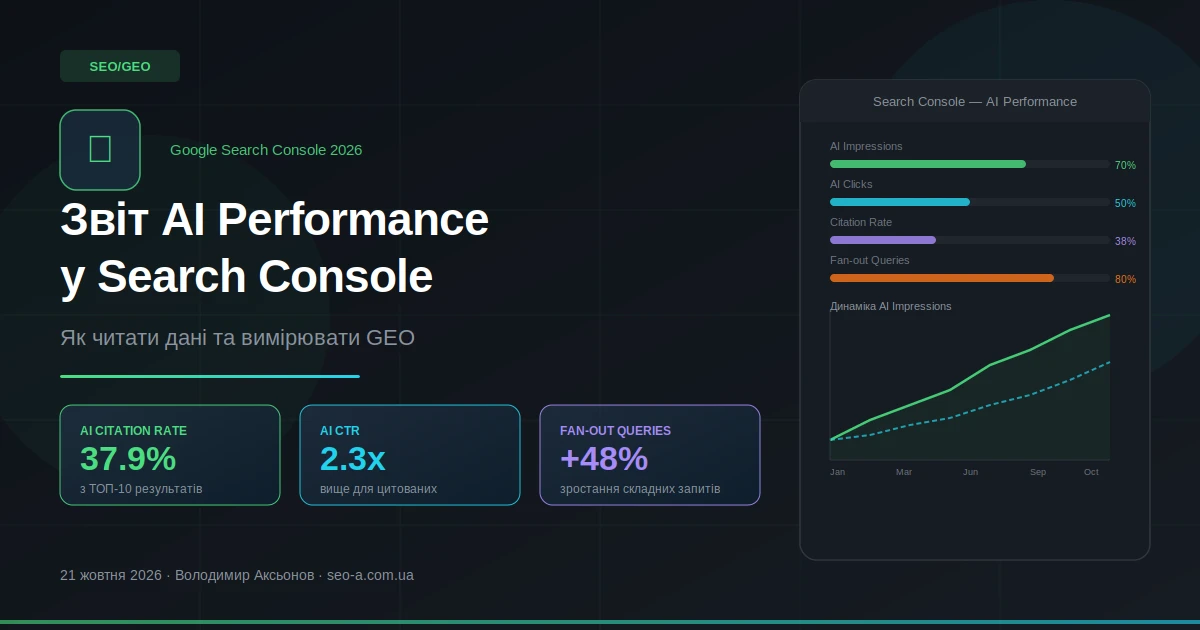
- AI Citation Rate above 40% signals optimal content structure for LLMs
- Clicks from generative blocks deliver higher conversion than classic organic
- Fan-out Queries (4+ words) show the strongest growth in the new report
The rollout of AI Overviews into global search left SEO professionals in a grey zone for months: we saw traffic fluctuations but had no precise tool to separate clicks from classic organic results and clicks from generative blocks.
The official launch of the AI Performance report in Google Search Console in 2026 was a major step toward transparency. However, the first weeks of using the new report caused significant confusion. Let's break down how this tool works and how to build accurate GEO analytics without mistakes.
1. The Main Trap: Why Didn't Your Impressions Double?
The first thing specialists noticed after the AI Overviews tab appeared in Search Console was the specifics of data counting. Google's Search engineering team clarified: new AI Performance metrics are carved out of existing statistics, not added on top.
This means:
- If your page previously appeared in search results AND was cited in an AI Overview block, Google counted this as one impression in the general Search Results report.
- In the new report, that same impression simply receives an additional attribute/filter. Adding figures from the Organic tab and the AI Overviews tab gives you artificially inflated data.
Total impressions = Organic without AI + Unique AI Overviews impressions
(Do NOT simply add up the total figures head-on!)
2. Key AI Performance Metrics: What to Look at First
To assess the real impact of generative search on your site, shift focus from absolute impression counts to three key dimensions:
AI Citation Rate
The ratio between total page impressions for an informational query and impressions in the generative block. If the rate exceeds 40%, your content is optimally structured for language models (LLMs).
AI CTR vs Organic CTR
In most niches, CTR in AI Overview blocks is lower than classic first-position organic due to the Zero-Click effect. However, clicks that come through from generative blocks have significantly higher conversion, as the user arrives already warm, having been convinced of your expertise.
Fan-out Queries
Pay attention to long phrases (4+ words). These show the strongest growth dynamics in impressions within generative blocks in the updated report.

3. Step-by-Step Analysis in Search Console
For building a quality monthly report, follow this sequence:
- Step 1. Open the Performance (Effectiveness) → Search Results section.
- Step 2. Apply the new filter by search type or search element: Search Appearance → AI Overviews.
- Step 3. Filter pages by "Pages" parameter and sort by descending impressions. You'll get a list of materials Google considers knowledge sources for its language models.
- Step 4. Compare these pages with those that lost positions in classic organic. If a page dropped in organic but grew in AI Overviews — you're not losing business, you're transitioning to a new audience interaction format.
We'll analyze your AI Performance data and develop a GEO strategy for your site.
Strategy Takeaways
The appearance of a dedicated report in GSC definitively confirmed: GEO is no longer a theoretical direction. By learning to read this data correctly, you'll be able to adjust your content plan not based on intuition, but relying on clear algorithmic signals from Google itself.