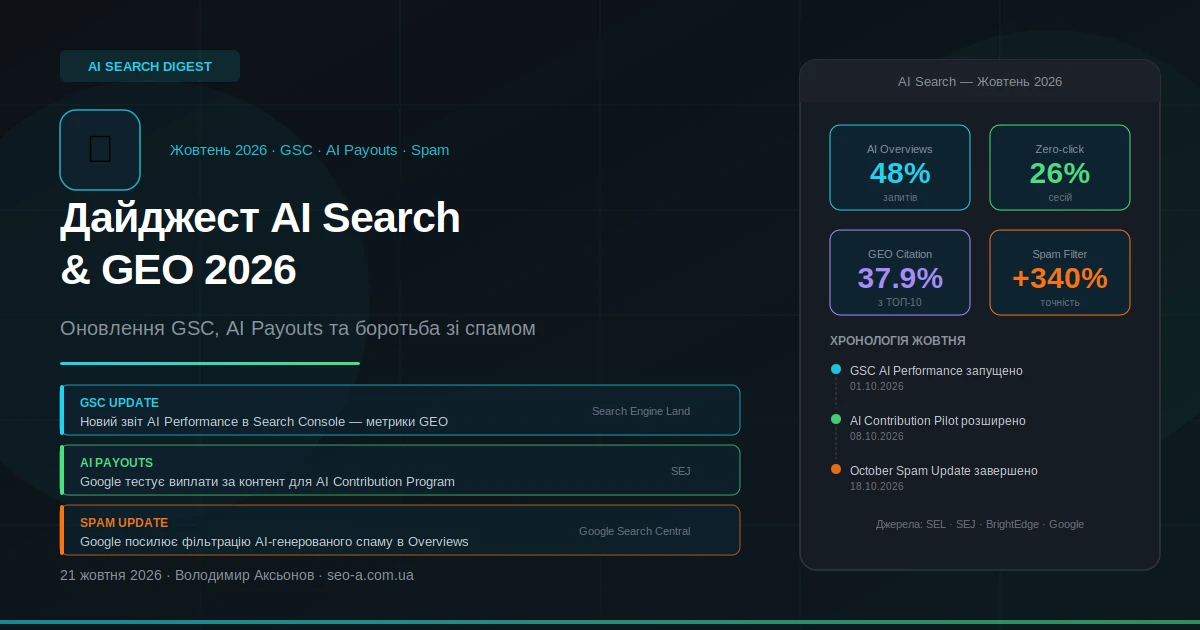
- Google launched AI Performance section in Search Console — new GEO measurement tool
- AI Contribution experiment confirmed: Google is testing payments to publishers
- Spam algorithm update: AI-generated content without value is being filtered
October 2026 brought three significant developments in AI search and GEO that SEO specialists should know about. We've compiled the key updates from Search Engine Land, Search Engine Journal, Google Search Central, and BrightEdge research.
1. GSC AI Performance Report: Now it's Official
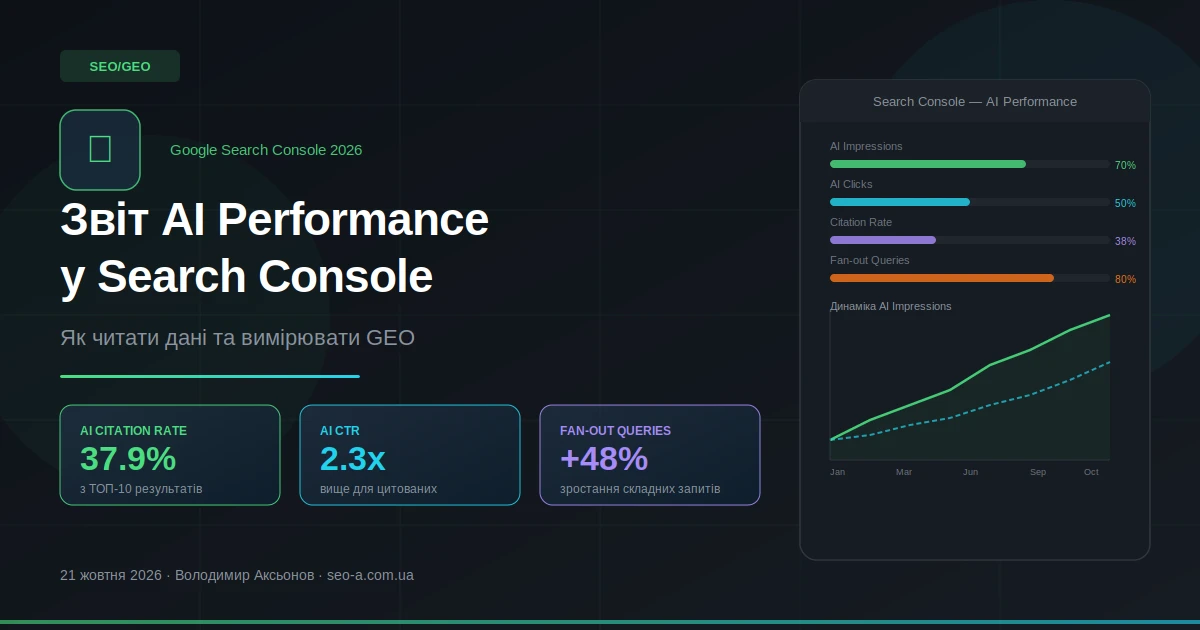
Google confirmed the official rollout of the AI Performance section in Search Console. The new interface allows you to separate impressions and clicks from AI Overviews blocks from classic organic results. This resolves one of the key pain points for GEO practitioners: the absence of direct data on generative search performance.
Important nuance: the data is presented as a breakdown of existing stats, not as a separate additional counter. Adding AI Overviews figures to overall organic results will produce inflated numbers.
2. AI Contribution Experiment: Google Announces Payouts to Publishers
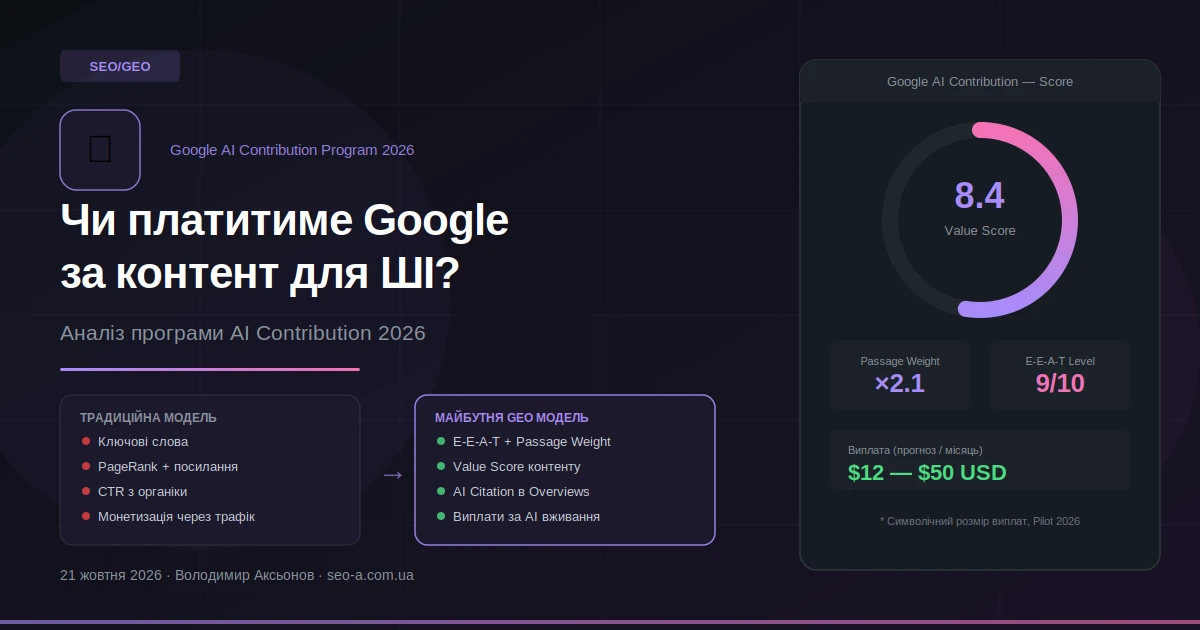
Google officially confirmed a limited experiment: the company is testing a model where publishers whose content is cited in AI Overviews receive monetary compensation. Early reports suggest payouts are calculated based on citation frequency and content quality metrics — not based on ad revenue.
The program is not yet publicly available. Participant selection criteria are based on factual accuracy, content depth, and E-E-A-T signals. There is no timeline for transition to general availability.
We'll develop a GEO strategy tailored to the new realities of AI search for your site.
3. Spam Update: AI Content Without Value is Being Filtered
Google rolled out a new wave of the spam algorithm update targeting AI-generated content that doesn't provide value to users. Important clarification from Google's official channels: AI-generated content per se does not violate guidelines. The algorithm targets low-quality content, mass-generated pages without unique value, and manipulative SEO tactics — regardless of creation method.
BrightEdge's analysis shows that sites using AI to generate unique research, expert commentaries, and structured data continue growing in visibility. The growth concentration among sites with strong authorship signals and original data is accelerating.