The question "how to rank in Google" sounds simple, but it requires systematic work across dozens of ranking factors. The good news: Google's algorithm is far more predictable than it seems. It rewards sites that are technically clean, answer real user queries and hold authority in their niche. Here is a practical step-by-step plan.
Step 1. Technical audit — the foundation of everything
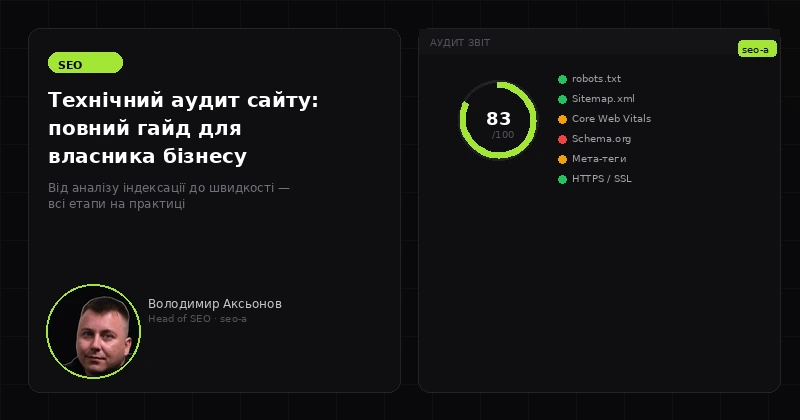
Before writing content and building links, confirm that Google can properly crawl and index your site. An SEO audit uncovers critical errors: pages blocked by robots.txt, duplicates, broken canonicals, incorrect redirects and speed issues.
Without an audit you risk optimising pages Google isn't even indexing. Check via Google Search Console (Coverage report) and PageSpeed Insights.
Step 2. Semantic core — find what your audience searches for
A semantic core is a structured list of queries your site should rank for. The right core determines: site structure, which pages to create, what content to write and where to focus effort first. Tools: Google Keyword Planner, Ahrefs, Semrush, Google Search Console Performance. Cluster by intent: informational, commercial, navigational — each type needs a different page format.
Step 3. On-page optimisation — every page has a purpose
Each page should be optimised for a specific query cluster. Key elements: Title (under 60 chars, keyword at the start), Meta description (under 155 chars, CTA), one H1 with main query, logical H2-H3 hierarchy, Schema.org markup and internal linking.

Step 4. Quality content — answer better than competitors
Google's Helpful Content updates made it clear: content that gives an exhaustive, practical answer wins. What quality SEO content looks like: covers the full spectrum of questions on the topic, contains unique author experience (E-E-A-T), backed by data, examples and screenshots, structured for quick scanning (H2/H3, lists, tables), updated regularly.
Step 5. Core Web Vitals — speed and stability
Since 2021 Google uses Core Web Vitals as a ranking signal: LCP (target <2.5s), CLS (target <0.1), INP (target <200ms). Common issues: images without WebP and lazy-load → LCP above 4s; fonts without font-display:swap → CLS on load; heavy JS → poor INP. Check via PageSpeed Insights.
We'll find what's holding your Google rankings back — report within 48 hours.
Step 6. Backlink profile — authority in your niche
Links from authoritative relevant sites remain one of the strongest ranking signals. Quality matters far more than quantity: one link from a niche publication is worth more than a hundred directory listings. Effective strategies: guest posts on topic-relevant sites, HARO, unique research (link bait), broken link building, niche partnerships.
Step 7. Analytics and KPI — what gets measured gets improved
| Metric | Tool | Target |
|---|---|---|
| Organic traffic | GA4 | MoM growth |
| CTR in search | GSC | >3% for commercial pages |
| Target query positions | GSC / Ahrefs | TOP-10 → TOP-3 |
| Core Web Vitals | PageSpeed | LCP<2.5s, CLS<0.1 |
| Organic conversion | GA4 | QoQ growth |